Player Code of Conduct +
By registering with DSSC, players are agreeing to:
A
Conduct themselves at all times in a respectful and sportsmanlike manner.
B
Do their best to attend all practice sessions and games, and at all times follow the instructions of the coaches.
C
Not engage in disruptive or disrespectful behaviour during practice sessions or games towards fellow teammates, other team players, the coaches, the referee, or spectators.
D
Not engage in any bullying, antagonism, foul or abusive language, or other intimidation of teammates or other team players.
E
Understand that soccer is a team sport. Teams "win together and lose together." Expressing sentiment such as "I am the best on the team" or "we could not have won that game without me" is unacceptable behaviour and will not be tolerated by the coaching staff.
F
Demonstrate a willingness to learn the game of soccer, and actively participate in drills, exercises, and scrimmages.
G
Understand and accept that their placement on teams may vary from season to season.
H
Dress neatly; the uniform will be clean and in good condition.
I
At practice and games, ensure playing areas and sidelines are kept clean, and all waste and trash is disposed in the proper receptacles.
J
Properly represent our soccer club and our community at all games and practices.
It is an organisational ambition for DSSC to be regarded as a highly respected, friendly club — a place where other communities experience a welcoming atmosphere that they look forward to returning to. Everyone associated with DSSC is responsible for ensuring that our community is recognised in this way.
Coach Code of Conduct +
DSSC puts a "Coach's Code of Conduct" in place because we, as an organization, want to ensure that games are fair, positive, and enjoyable experiences for all the children and adults involved. A soccer game should be friendly and unifying — a spirited social and athletic occasion for players, coaches, referees, and spectators.
To clarify expectations, DSSC expects all coaches to conform to the following code of conduct:
Before, during, and after the game, be an example of dignity, patience, and positive spirit.
Before a game, introduce yourself and shake hands with both the opposing coach and the referee.
Understand that it is DSSC's philosophy to put the development of players above team wins and losses — coaches are charged with providing a safe and educational environment focused on player development.
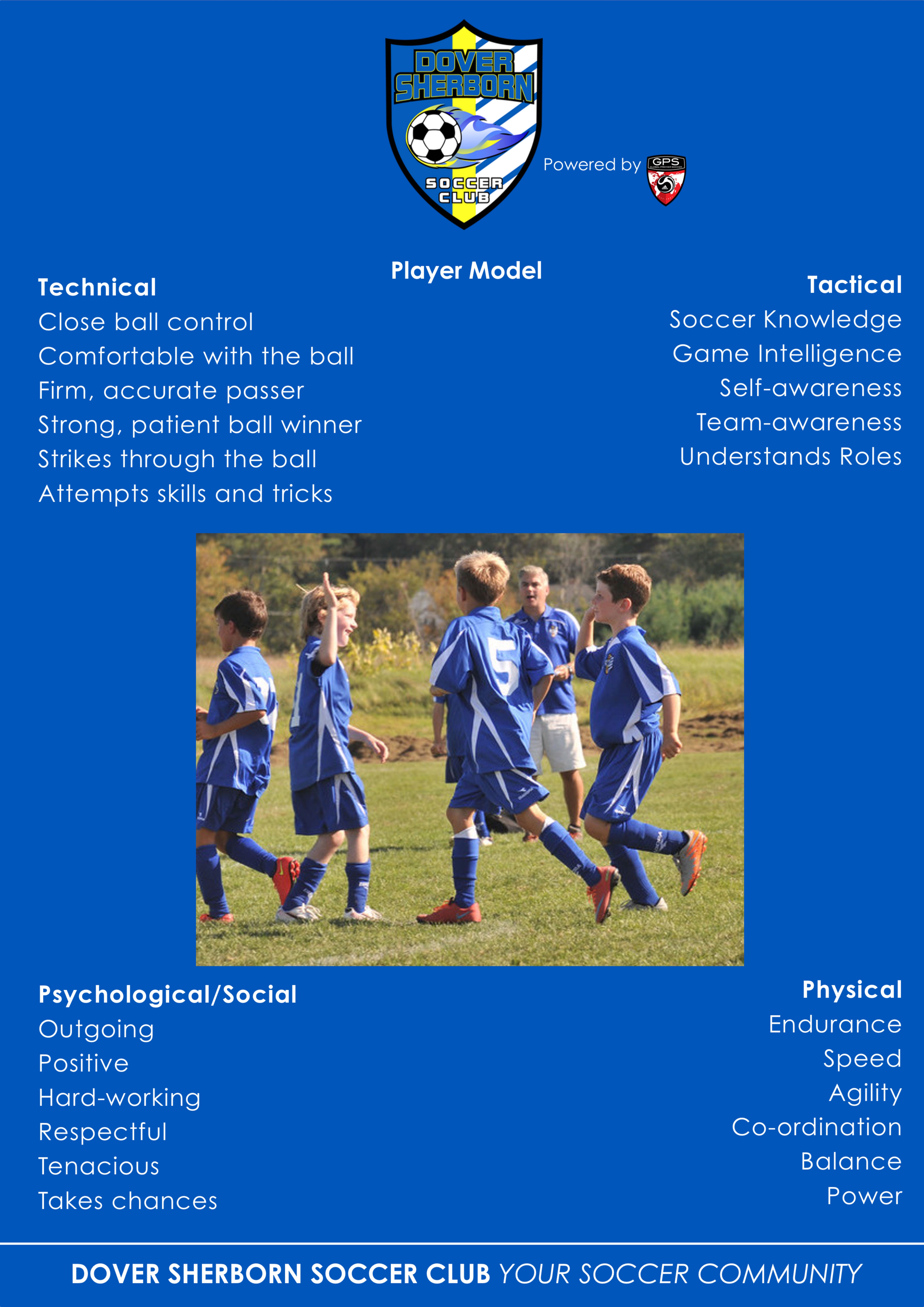
During the game you are responsible for the sportsmanship of your players. If a player is disrespectful, irresponsible, or overly aggressive, take them out of the game and remind them of the correct behaviors befitting the DSSC Player Model.
Encourage parents to applaud and cheer good plays by either team. Discourage them from yelling at players from either team, or at the referee.
During the game, you are also responsible for the conduct of all spectators rooting for your team.
During the game, do not address the referee at all. For a small issue, discuss it with the referee calmly after the game. For a major complaint — unfairness, bias, or incompetence — report it to the league. Reactions are only taken seriously when presented objectively and formally.
After the game, thank the referee with a handshake and congratulate the opposing team and coach — your players must do the same.
DSSC advises coaches to have players shake hands with them before and after both practice and games — part of teaching the value of respect.
It is an organisational ambition for DSSC to be regarded as a highly respected, friendly club — a place where other communities experience a welcoming atmosphere that they look forward to returning to. Everyone associated with DSSC is responsible for ensuring that our community is recognized in this way.
Two Points We Stress
1
Referees — especially young and inexperienced ones — are like your players and yourself, in that they need time to develop. You help them improve by letting them concentrate on the game: encourage them, accept their inevitable occasional mistakes, and offer constructive post-game comments. Criticizing their decisions, verbally abusing them, or inciting (or even accepting) your own players' aggressive behavior discourages and demoralizes them instead.
2
Your example is powerful, for better or worse. If you insist on fair play, focus on your players' enjoyment and long-term development, and support the referee, your players and their parents will notice. If you encourage (or allow) play outside the rules, obsess over results, or criticize the referee harshly, they'll notice that too.
Think about what you're doing during a game. Uphold the spirit of the game. If you follow the expectations above, the spirit of the game will be alive and well in Dover and Sherborn, and will grow, along with everyone's enjoyment.
Coaches who don't follow the expectations described above will be subject to discipline and/or removed from coaching.
Keeping the score down in a blowout: please review this presentation on lopsided games and steps you can take to help prevent them.
Zero Tolerance Policy (Coaches)
All individuals responsible for a team, and all spectators, shall support the referee. Failure to do so undermines the referee's authority and risks creating a hostile environment for players, the referee, and all other participants and spectators.
No one, except the players, is to speak to the referee during or after the game.
Exceptions: Coaches may ask questions before the game, call for substitutions and point out emergencies during the game, or respond to the referee if addressed.
Absolutely NO disputing referee decisions, during or after the game — no remarks about watching certain players or attending to rough play, and no addressing the referee in an aggressive or abusive manner. No criticism, sarcasm, harassment, intimidation, or feedback of any kind during or after the game.
If there's an issue with a referee, please contact club leadership.
Game Day
Enjoy the game. You've coached and taught the players — now let them play. Observe, and give minimal advice from the sideline; some encouragement and constructive comments are all that's needed.
Never criticize the referee during the game. If you have an issue about a rule (never a judgment call), speak to them after the game — set a positive example for players and parents.
Pre-Game
- Be organized. Know your players' strengths and weaknesses. Come prepared with a starting lineup.
- Everyone should be ready for warm-ups 30 minutes before the game.
- Ensure all players are prepared — shin guards covered by socks, all jewelry and bracelets removed, shirts tucked in.
- Use warm-ups to get the ball involved quickly so players get a feel for it and the playing conditions. Give goalkeepers good service to their hands and encourage footwork.
- Keep team talks short and sharp: positions, plus a couple of key things for a successful game.
During the Game
- You assign player positions — do not let players dictate where they play.
- Have a substitution plan with equal playing time, and ensure ALL players rotate positions.
- Give tactical input as open-ended questions ("How could you help your teammate with the ball?", "Where's the space?") rather than commands ("Kick it," "Boot it") — we want players who think and decide for themselves.
- Encourage creativity and trying new things without fear of failure. Players learn from mistakes.
- Players stand on the sideline with you, away from midfield. For substitutions, they wait at midfield until the referee signals them in. Coaches do not step onto the field or stop play for subs.
- Parents sit on the opposite side of the field from players, and never behind the goals.
- Set a positive example: stay calm, stay on your side of midfield, and encourage with phrases like "Great try" or "Good idea."
- Calling out a good play by the opponent, within earshot of parents and players, goes a long way.
- Remember: parents are watching you as much as their children.
- Keep the half-time talk short and sharp — positives first, then one or two areas to improve.
Post-Game
- Give the opposing team a cheer, and shake hands with them and the referees.
- Take time to de-brief with the team — lead with the positives, then touch on areas to improve.
- Leave on a positive note.
- Remind players of the next game or practice.
What options are open to a BAYS coach who feels rough play is being allowed and is worried for their players' safety?
We're sure your games will be filled with rainbows and unicorns and you'll never need this — but should the unlikely happen, BAYS offers three possible steps to consider:
A
Talk to the opposing coach — try to find a way between the two coaching staffs to de-escalate the situation.
B
Only players on the field may speak to the referee — ask a player being subbed in to raise the concern.
C
As a last resort, remove your players from the field. The game is recorded as a forfeit (appealable), but player safety comes first.
DS Soccer Policy on ZT Violations
First ZT2 violation: requires a letter of unqualified apology to the referee (and opposing coach, if appropriate). If a home DS Soccer referee is involved, a face-to-face apology is also required within four weeks. The coach is informed that a second violation results in a one-week suspension.
Second ZT2 violation, or first ZT3 violation: one week's suspension from coaching practice and games, plus a required letter of apology.
Third ZT2 violation, or second ZT3 violation: suspension for the remainder of the season, and the following season.
Parents and Spectators Code of Conduct +
Parents and Spectators, it is easy to have a great Coach/Parent/Player experience. Just follow these nine simple rules…
1
Understand the coach and team philosophy. If you don't know the goals of the team (for example, player development versus winning), ask the coach.
2
Send your children ready to play. They should be properly fed and clothed, and they should arrive on time.
3
Support the team, but do not instruct the players. It confuses your child and others, and undermines the efforts of the coach.
4
Avoid confusion when cheering. Do not say anything that is a command, such as "Pass it," "Shoot," or "Boot the ball."
5
Use positive encouragement instead. This would include such comments as "Way to go," "Nice effort," or "Stay with it."
6
Refrain from speaking to officials, unless it is to say thank you after the game. If you have questions or concerns with the referees, relay the information at the proper time (see rule 7) to the coach.
7
Speak to the coach at the proper time. If you have concerns, use e-mail or the telephone. If it is about a game, let the dust settle for a couple of days first.
8
Report to the coach all injuries, special medical conditions (such as asthma), or extenuating circumstances (such as lack of sleep or family crisis) that may affect the player.
9
Cheer enthusiastically for your team but please behave respectfully towards the opponents — they are someone else's children as well.
Zero Tolerance Policy +
All individuals responsible for a team and all spectators and parents shall support the referee. Failure to do so will undermine the referee's authority and has the potential of creating a hostile environment for the players, the referee, and all the other participants and spectators.
No one is to speak to the referee during or after the game. Exceptions: Coaches may ask questions before the game, call for substitutions and point out emergencies during the game, or respond to the referee if addressed.
Absolutely no disputing calls, during or after the game, no remarks to the referee to watch certain players or attend to rough play. NO YELLING at the referee, EVER, and no criticism, sarcasm, harassment, intimidation, or feedback of any kind during or after the game.